

Health Policy, Weight Bias and World Events: Why I refuse to take a neutral stance as a dietitian.
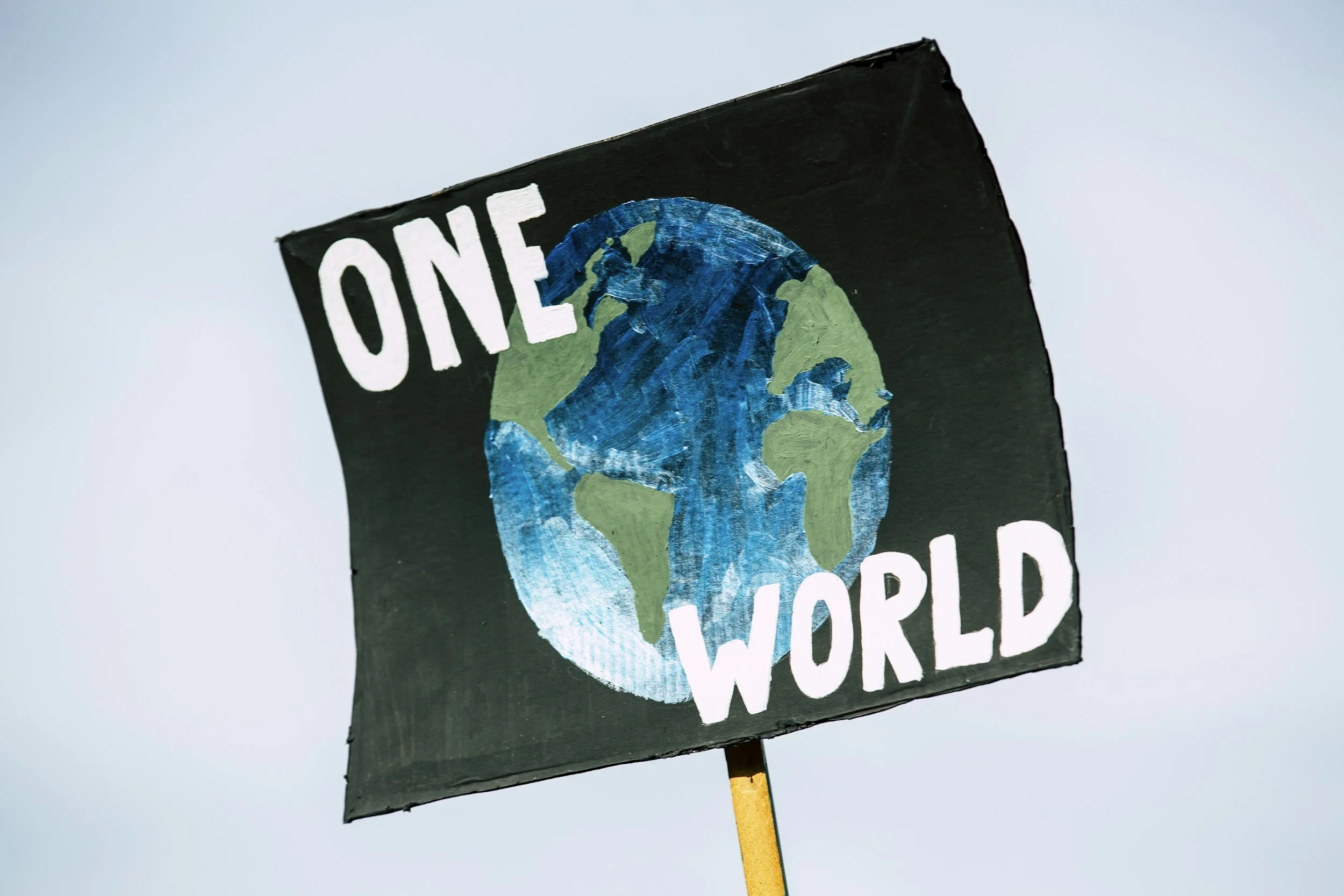
I sometimes feel caught between two opposing viewpoints in my mind: food and nutrition are inherently political in the societal climate we are living in and, You're a dietitian. Stick to food. I know that others following along may feel this way too, so I want to talk about it.
I understand where this comes from. If food isn’t controversial is can appear to be a comfortable topic. Politics is supposed to be the other thing, the thing that has no business being on a business account. But I know enough about myself to know that the former thought is one based on both fear and the beliefs I have accumulated over a lifetime in this world – not how I actually feel. The latter is the thought that aligns with my values.
I choose the latter. So, when I post about healthcare policy, or bias, or what's happening in the world instead of what's on a plate, it reads to some people like I've wandered out of my own lane. But the problem is, I was never in the lane those people thought I was in in the first place.
Neutrality about current events feels like the safe choice. But I think many of us have learned this week (with the rapidly unfolding news of Macklemore and Ed Sheeran) how sick and tired we are of people trying to line their pockets while fence sitting. When someone is naming something true and the people around them go quiet rather than risk "getting political," that silence isn’t neutral; it’s a choice, and it’s one that quietly benefits whoever needed things to stay as they are.
Healthcare is just where I watch it play out closest to home.
Health policy decides who gets believed
Nutrition doesn’t exist outside the healthcare system it operates in, and that system runs on policy, not just science. Take the number so much of it still runs on: BMI was built in the 1830s by a Belgian statistician measuring populations through a quest to quantify the “normal man,” not individual health. It was never meant to sit at the door of surgery eligibility, fertility treatment, or what a specialist will even agree to see you for.
This was not an accident. The convenience of calculating the BMI made it easy pickings for clinical guidelines and coverage criteria in the first place, and weight bias is what perpetuates it as a stand-alone health marker. That bias is largely unconsciously present when deciding what research is done and what gets funded. Weight-inclusive care, while there is now a breadth of evidence to support it, has a thinner research base than dieting does because the same bias that shapes a waiting room also shapes a grant committee. There is bias baked into the evidence gap.
And the stakes are not hypothetical, but well documented. Puhl’s 2023 review found that in Canada specifically, adults in the highest weight category had 52% higher odds of reporting discrimination from a healthcare provider. Two-thirds of people across six countries who reported weight stigma said it came from someone treating them medically. When I talk about self-advocacy with a healthcare provider, I’m not being edgy. I’m describing a documented failure that policy and funding decisions perpetuated, one bias at a time.
Weight bias exists beyond the exam room
When we talk about bias and discrimination in different systems, we are really talking about a single thread. A throughline that exists in all forms of oppression. When we are talking about one, we are really talking about all. The same assumptions that shape the care you may receive also have a hand in shaping who gets hired, who gets read as competent, who gets a harsher outcome for the same behaviour. That bias travels freely between a doctor’s office, a boardroom, and a courtroom, because it was never really about health in the first place - it’s about who a system has already considered worthy, trustworthy and deserving, even before the person walked in the room. Pointing that out actually directly relates to the work I do because it’s still bias, doing what bias does: deciding the rules before anyone gets a fair look.
This isn’t happening in a vacuum
The world outside my office sometimes directly shapes what happens inside it, so I’ll name some of it directly.
I call what’s happening to Palestinians a genocide and I’ve been saying it for a while now, along with many others who have been shouting longer and louder than me. The United Nations’ own Commission of Inquiry agrees; the International Court of Justice case on the same question is still years from a ruling, but I’m not waiting on a court to say what is clear as day. Naming this has nothing to do with how I feel about Jewish people, and I want to be direct about that distinction because it matters: condemning a government’s conduct is not the same thing as condemning a people, and collapsing the two is its own kind of harm.
Closer to home, I’m watching Canada absorb retaliatory tariffs from a US administration after we declined trade terms that would have overwhelmingly disadvantaged Canadian citizens — and I’m watching a referendum push in Alberta that’s separatist in nature and carrying racist undertones in the framing of many of the questions being asked of us. At the same time, I’m watching policies erected that are discriminatory to the trans community and infringe on their right to be who they are. Public healthcare and public education get quietly hollowed out in favour of a two-tiered system and a growing private-school track, which tends to land hardest on people who don’t have a second option to fall back on.
I’m naming these because they’re not a separate conversation from the one about bodies and food. They’re the same conversation: whose life, whose citizenship, whose suffering gets treated as negotiable by the people writing policy. That includes the size of your body and what a food budget can actually buy this year. “Just eat more whole foods” is easier advice to give than to sit in the room with someone who is overwhelmed by how much groceries cost right now, where the best answer for them is I’m so sorry this is happening. A lot of nutrition advice quietly assumes a stability that fewer and fewer people have.
I think it is also worth naming, albeit a bit quieter, that nutrition advice has a louder, less credentialed megaphone right now, from people with a large platform and no training. This is its own small piece of the same pattern: someone with power and a platform deciding what counts as true for clicks and the dollars that follow, for people who never got a say in it.
Why I refuse to stay neutral
So when I post about a policy, a bias, or a world event instead of a recipe, I’m not stepping outside my expertise. I’m stepping into it. A dietitian who only ever talks about the plate and never about who built the kitchen, who’s allowed in the room, or what’s burning down outside it isn’t being neutral. They’re just leaving out the part that often has just as big of an impact on the people I see daily.
I’d rather tell you where I actually stand, even knowing it won’t sit well with everyone reading this. I say all of it because I still believe most of what I’ve described can change — bias gets built, which means it can be unbuilt, one honest conversation at a time. And we can’t change what we won’t acknowledge. If any of this landed differently than you expected, I’d like to hear about it. Reply and tell me.
Resources:
Puhl, R. (2023). Weight stigma review. Gastroenterology Clinics of North America.
